
When the Tooth Has to Go
Professional Tooth Extractions in Carrollton
We take out teeth that can’t be saved, then graft the socket so your choices for replacing them stay open.
What Is a Tooth Extraction?
Tooth Extractions in Carrollton are how we remove a tooth that can’t be saved, with the replacement planned before it comes out. Many extractions are simple. The tooth is loosened in its socket and lifted out whole. A surgical extraction is for a tooth that has broken off at the gum or has roots that curve. We open the gum a little, and the tooth may be divided so each root comes out on its own path. Most teeth that need to come out can come out right here in our office. If a tooth breaks suddenly, start at Emergency Dentistry. Either way, you’ll know the whole plan before we begin.
Why Would You Need a Tooth Out?
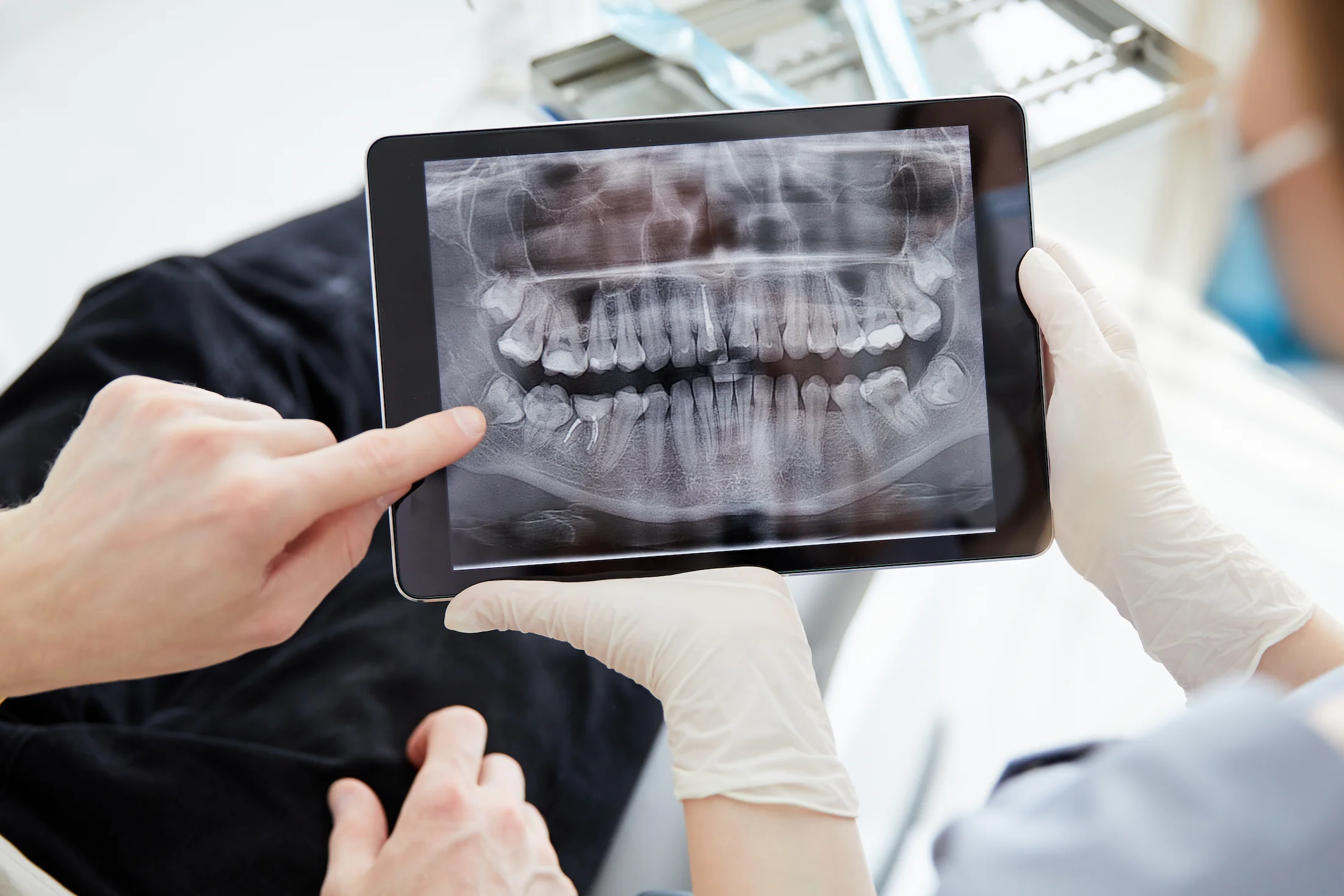
A tooth is worth keeping while there’s enough of it above the gum to build on and enough bone below to hold it steady. When a root splits, decay runs too deep to repair, or gum disease takes away the bone, keeping the tooth usually stops being the better choice. There’s one more thing to know. Once a tooth is gone, the jawbone that held it starts to shrink. It shrinks fastest in the first year, and it doesn’t stop there. That bone is what Dental Implants and a steady fit for Dentures depend on later. Planning ahead keeps those choices open for you. Jennifer Hamorsky, DDS, FAGD has been a dentist since 1995, and as a general dentist she plans the removal and the replacement together, here with you. Call us, and we’ll walk you through every option.
What to Ask About Tooth Extractions in Carrollton
Does having a tooth pulled hurt?
You’ll be numb, so what you feel is pressure rather than pain. We give local anesthetic first and check that it’s working before we start. If you feel anything sharp, tell us, and we’ll stop and add more.
What happens if I need my wisdom teeth out?
Jennifer Hamorsky, DDS, FAGD checks your wisdom teeth on your x-rays and tells you plainly what the plan is before anything is booked. Your regular care with us carries on either way.
Why would I need a bone graft after an extraction?
Once a tooth is gone, the bone that held it starts to shrink, and an implant or a steady denture needs that bone later. That’s why Jennifer Hamorsky, DDS, FAGD recommends a bone graft at every extraction, to limit how much it shrinks. Bone grafting is done right here in our office.
How long does it take to heal after a tooth extraction?
Healing varies, but the gum closes over first and the bone underneath fills in over several months. Stick to soft food at first, and skip straws, smoking and hard rinsing early on. We check how the site has healed before anything goes into the space.
What decides the cost of a tooth extraction in Carrollton?
It depends on whether the extraction is simple or surgical, how many teeth are coming out, and the imaging and grafting your case needs. You’ll see the whole plan before anything starts. We accept insurance and file the claim for you, and CareCredit and Cherry financing are available.
How should I prepare for a tooth extraction?
Eat beforehand and bring a list of your medications. Let us know about blood thinners, osteoporosis medicines or any surgery you have coming up. Plan a quiet afternoon, and we’ll go over aftercare with you before you leave.
What is dry socket and how do I lower the risk?
Dry socket happens when the blood clot breaks down early and leaves bone exposed, often as a deep, throbbing ache that starts a little while after the extraction. Smoking raises the risk most, and straws and hard rinsing early on don’t help either. If it happens, call us, and a soothing dressing in the socket usually eases it.
Can a tooth be taken out if I take a blood thinner?
Usually, yes, with some planning. Tell us what you take and who prescribes it, and Jennifer Hamorsky, DDS, FAGD will coordinate with your physician beforehand. Please never stop a prescribed medicine on your own.
Don’t see what you’re looking for?
Service Menu

Every Smile Matters
Did you know?
From 1750 to 1850 the toothkey was the usual way to take a tooth out. A claw on a metal shaft gripped the crown and turned the way a key turns in a lock. Sir John Tomes made forceps shaped to each tooth in the 1840s, and the key didn’t last.

Every smile matters.
Celebrating 32 years of putting people first.
Quick Links
Contact Us
Phone
Address
Jennifer Hamorsky, DDS, FAGD, General Dentist
Copyright © 2026. All rights reserved.